Stablecoin Payments in Africa: Three Business Models for Emerging Fintechs

Ted Nguyen
Author
BD & Growth @Fystack
TL;DR
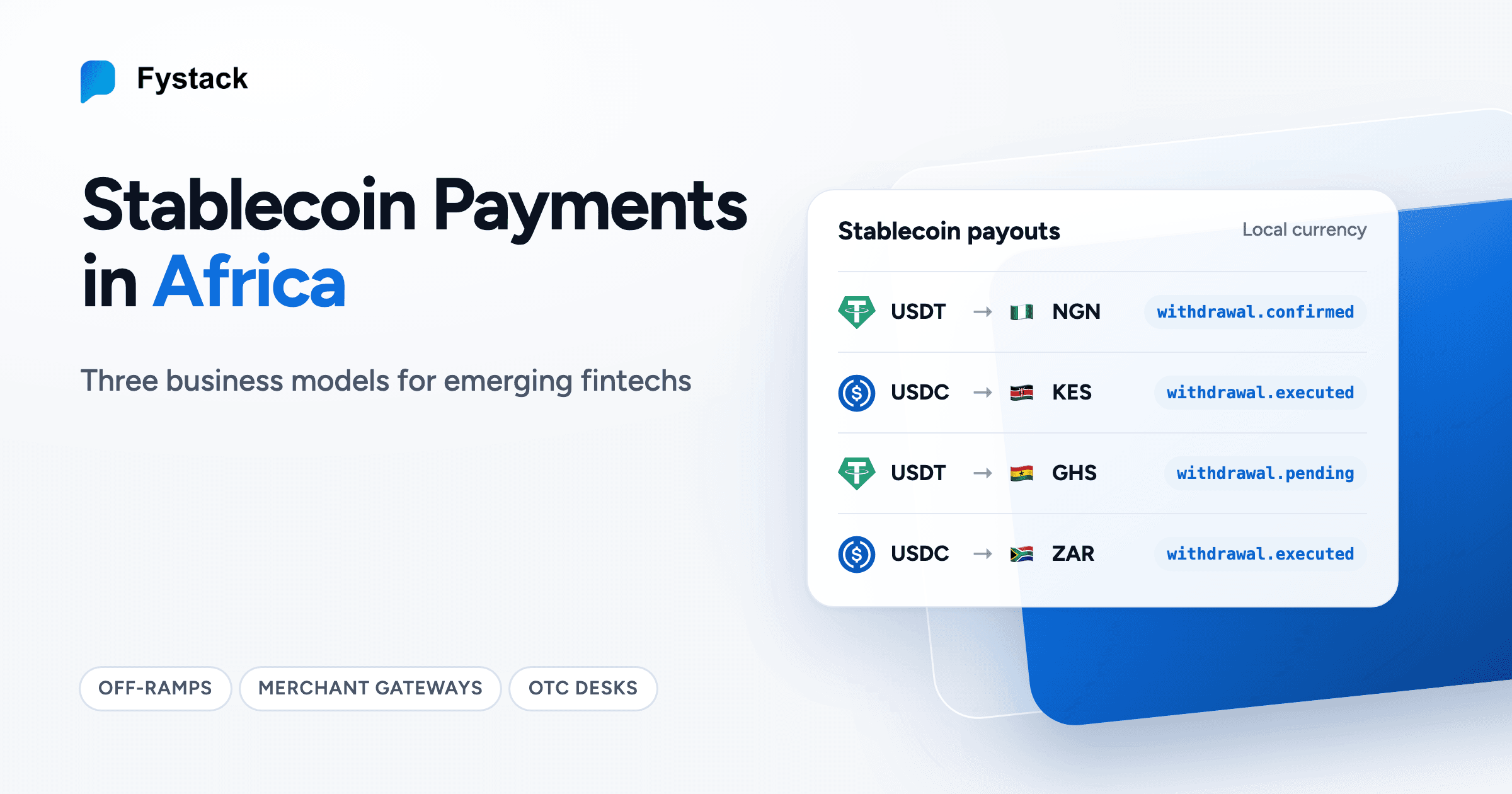
Stablecoin adoption is creating new opportunities for fintechs across Africa, particularly in cross-border payments, access to US dollars and business settlement. Three business models stand out: stablecoin off-ramps to mobile money, payment gateways for merchants, and OTC services for businesses. Each requires reliable infrastructure to manage wallets, process transactions and control fund movements.
Stablecoins are creating new ways to move money across Africa, from cross-border transfers to business payments. For local fintechs, this creates opportunities to build services around stablecoin off-ramps, merchant payments and B2B settlement.
Why Stablecoin Payments Are Growing in Africa
High Cross-Border Payment Costs
Sending money to Sub-Saharan Africa cost 7.9% on average for a $200 transfer in Q4 2023, the highest of any region, according to the World Bank. Limited interoperability between mobile money providers adds friction to regional transfers, leaving room for more efficient cross-border payment solutions.
Demand for US Dollar Access
Currency volatility and restrictions on foreign currency access make dollar-denominated stablecoins useful for individuals and businesses. Chainalysis recorded more than sixfold growth in stablecoins received through peer-to-peer channels across Sub-Saharan Africa between 2022 and 2026, reaching $14.6 billion.
Growing Use of Stablecoins in Business Payments
Stablecoin payment corridors connecting African businesses and consumers increased from 80 to 152, while transaction volume more than tripled to $116.5 million, according to Chainalysis. This creates demand for services that help businesses collect stablecoins, settle cross-border payments and convert funds into local currency.

Three Stablecoin Business Models for African Fintechs
Stablecoin demand creates opportunities for fintechs to serve different payment needs, from converting digital dollars into local currency to helping merchants and businesses move funds across borders. Three business models stand out:
Table 1. What each stablecoin business model solves for customers, and what the fintech needs to provide.
Stablecoin Regulation in Five African Markets
Regulatory requirements vary across African markets and depend on the services a fintech provides. Some countries have introduced licensing frameworks, while others are still developing their rules. Here is where five key markets stand in 2026.
Table 2. Stablecoin regulatory status in Kenya, Ghana, Nigeria, South Africa and Uganda as of November 2026. Sources: Kenya Legal Notice 134 of 2026, Bank of Ghana, Nigeria SEC, Chainalysis.
Customer asset protection is also becoming an important part of the regulatory landscape. Kenya's VASP framework requires licensees to segregate customer assets from their own and reconcile them against on-chain records monthly. In Uganda, client asset protection is among the six pillars proposed by the central bank governor.
For fintechs building stablecoin payment products, this makes wallet segregation and withdrawal controls important infrastructure considerations. Fystack supports these workflows through dedicated Hyper wallets for customer funds and Approval Groups that assign withdrawal approvals to designated team members.
Conclusion
Stablecoin payments offer African fintechs opportunities across cross-border transfers, local currency access and business settlement. Fystack provides the wallet and payment infrastructure to support these services, whether you're preparing to launch or already processing transactions.
Book an introductory call to discuss your use case and infrastructure requirements with our team.
Frequently Asked Questions
Which African countries regulate stablecoin businesses?
Kenya has introduced a VASP licensing framework, while Nigeria operates a regulatory incubation programme. Ghana, South Africa and Uganda have taken different approaches, with requirements varying by country and business activity
What infrastructure does a fintech company need to launch a stablecoin payment service?
Core infrastructure includes wallet management, transaction monitoring, fund transfers and withdrawal controls. Off-ramps and merchant payment services may also require liquidity and local payment partners.
Can fintechs use stablecoins for mobile money payouts?
Yes. Fintechs can accept stablecoins and convert them into local currency for mobile money or bank payouts through liquidity and payment partners.