Fystack vs Utila: How to choose the right MPC wallet for your Web3 business

Ted Nguyen
Author
BD & Growth @Fystack
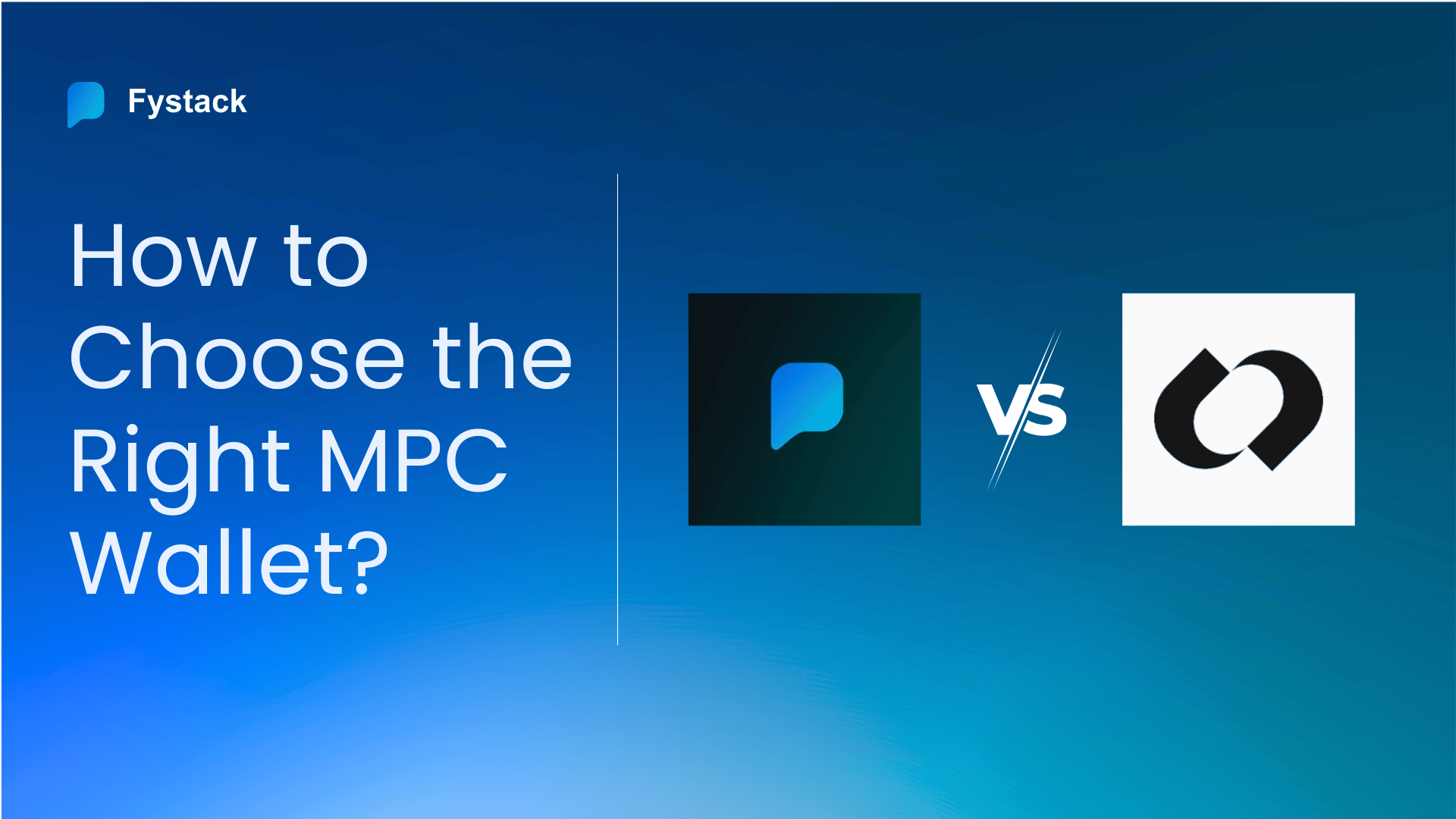
There are many digital asset custody platforms available today. Each one serves a different purpose and comes with its own set of advantages and disadvantages.
Choosing the right custody platform is a critical decision for any business because it affects your security, your costs, and how much control you have over your assets.
To help you make an informed decision, we have written a series of articles where Fystack compares itself with other custody providers. In this post, we look at Fystack and Utila to see which model fits your business needs best.
Fystack vs Utila deployment time: Get your MPC wallet live in 2 weeks
In the world of crypto infrastructure, speed is often used as a marketing tool. Many SaaS providers say you can start in minutes, but that usually just means you get access to a dashboard.
The real work of integrating the system into your business can still take months of reading fragmented documents, complex APIs and slow support cycles with tickets.
Fystack offers two ways to get started. Our SaaS version is ready for use immediately. For businesses that want more control, our self-hosted version is completely finished in less than 2 weeks.
This means your team is actually ready to start doing business and generating revenue.
We focus on completing the integration so you can focus on your customers.
Why building in-house is not worth the risk
Some teams consider building their own MPC wallet infrastructure from scratch. While this might seem like a good idea for total control, it is almost always more expensive and time-consuming than you expect.
Building an in-house solution requires hiring specialized cryptographers, months of core development, and expensive third-party security audits. Even after it's built, you are responsible for endless maintenance and updates.
Fystack offers a "developer-first" alternative that gets you to the revenue-generating phase much faster.
As the comparison below shows, Fystack allows you to finish your integration and start generating revenue while an in-house team would still be in the middle of hiring and development.
You get the same level of control and security without the massive upfront cost and headache.

Open source MPC wallet technology: Why we start with Binance tss-lib
In recent years, the industry has seen the evolution of MPC technology with newer protocols like CGMP21 or DKLS23. At Fystack, we value these advancements, but we chose to start with the most battle-tested and widely adopted library available: the Binance tss-lib based on the GG20 (Gennaro and Goldfeder) protocol.
“The initial goal is not focusing on performance but trust and adoption.” - Thi, Founder of Fystack
We believe security should be verifiable. While no protocol is completely immune to risks and so does GG20. It has faced implementation vulnerabilities in the past, however, our version is a maintained fork that benefits from years of community scrutiny and constant updates.
Being open source on GitHub means your team can audit the cryptographic logic themselves.

Most MPC custody providers today operate as closed systems where the code is not visible. We prefer a model where you can verify the security for yourself rather than relying on a provider's internal processes.
Self-hosted vs SaaS custody: Owning your keys and data
There is a major difference between a hosted service and self-hosted infrastructure.
When you use a SaaS provider like Utila or Fireblocks, your transaction data and private key shards live on their infrastructure. This means your sensitive information passes through their servers every time you make a move.
Fystack, on the other hand, is a self-hosted MPC wallet infrastructure. This means you own the entire setup. Your keys, your policies, and your data stay within your own environment. We own nothing and we see nothing.
This level of sovereignty is essential for businesses in the APAC region, especially Vietnam that must comply with strict local data residency and jurisdiction laws.

Developer friendly MPC SDK: How Fystack makes wallet integration easier
Building with digital assets is already complex, so we believe your wallet infrastructure shouldn't be.
Most custody providers offer rigid APIs that are hard to customize or adapt to unique business needs. Fystack takes an SDK-first approach, meaning we provide the tools for your developers to embed MPC wallets directly into your own application's flow.
Additionally, we want to make it as easy as possible for builders to get started and this is why we offer a free version forever for developers to learn and experiment with our technology.
Whether you are a solo developer or a growing team, we provide the flexibility to build on your own terms.

Utila pricing vs Fystack: Why you should stop paying fees based on your AUM
Many SaaS providers, including Utila, use a pricing model based on your transaction volume or Assets Under Management (AUM).
For a business with $100k in AUM and 10,000 transactions per month, this can cost $USD 30,000 a year. As your business grows and your volume increases, this cost goes up even more.
Fystack uses a fundamentally different model: flat-fee pricing. We believe your infrastructure costs should be predictable and fair.
Whether you manage $100,000 or $100 million in assets, your price stays the same. This allows you to keep more of your revenue and reinvest it back into your business as you scale.
Direct customer support: Why Fystack skipped the ticket system
In the middle of a technical deployment or a critical operation, the last thing a team needs is to wait for an automated response from a support ticket. Most large SaaS providers rely on tiered ticketing systems that can take hours or even days to get to the right person.
At Fystack, we believe that infrastructure support should be an extension of your own team. This is why we communicate directly via Telegram or Slack or whatever channel you prefer.
You get direct access to the engineers who built the product. There are no bots and no "Level 1" filters to slow you down. This approach allows us to solve problems in real-time and helps our clients move faster.

Why your startup might not be a priority for Utila
While Utila is a polished platform, their primary focus is on large, high-volume institutions handling billions of dollars in daily transactions.
When you use a SaaS provider that manages massive global clients, you have to ask: where does your startup sit on their priority list?
If you encounter a technical issue and have to use their ticket system, you are competing for attention with multi-billion dollar firms. At Fystack, we built our business to support the builders, early startups, and SMEs in the APAC region.
1/ Neobanks (like Gaian): We help them automate fund sweeps and multi-chain deposit address generation.
2/ Web3 Super Apps (like ApeScreener): We provide treasury management with role-based access and approval workflows.
3/ P2P Exchanges (like EXDT): We offer jurisdiction-safe deployment where keys stay in-region, enforced by HSM.
4/ Payment Gateways (like PrimePay): We help QR payment providers in Southeast Asia manage their treasuries effectively without paying high volume fees.

Fystack vs. Utila: The honest trade-offs
To be fair, no system is perfect for every single use case. Utila is a polished product for large institutions that want a managed service to handle everything for them.
They currently offer more "out-of-the-box" connectivity, such as support for DeFi protocols like WalletConnect and built-in staking integrations.
Fystack is currently building these features. WalletConnect is on our roadmap for this year, and we are integrating more DeFi and AML/KYT features right now. For many startups, Utila’s extra enterprise features might be more than they actually need today.
Summary: Which model fits your business?
Choosing between Fystack and Utila comes down to your core business philosophy.
If your priority is sovereignty, local compliance, and predictable scaling, Fystack is the suitable choice. We built it for the builders who want to own their infrastructure, keep their keys in-region (essential for Vietnam/APAC), and stop worrying about data residency & sovereignty compliance.
However, if you are a large institution that needs a fully managed SaaS and requires immediate, out-of-the-box DeFi connectivity or native staking today, Utila is a polished and reliable choice.
Frequently Asked Questions (FAQs)
What happens if I want to move from Utila to Fystack?
We offer full migration support. We understand that moving assets and keys can be stressful, so our engineering team works directly with yours on Telegram or Slack to ensure a smooth transition without downtime.
Can I really use Fystack for free?
Yes. We have a free version forever for developers to learn and experiment. We want to support the next generation of APAC fintech before they have to worry about infrastructure costs.
Does Fystack support my local regulations?
Yes. Because you choose where to host the nodes, you can ensure your keys and data stay within your specific country or region. This makes it much easier to comply with local data residency and jurisdiction laws.
Is Fystack harder to manage than a SaaS like Utila?
Because Fystack is self-hosted, you are responsible for your own server management. However, we provide one-line scripts and automated tools to make this very simple for any developer.